
USFans Spreadsheet: Find a Product You Can Actually Compare
A USFans spreadsheet is useful when it turns a broad search into a short list of identifiable products. It should help you answer a practical question: which option meets your requirements, and what must you check before choosing it? A large number of rows is less useful if several lead to the same item or leave the selected size unclear.
Start with one need rather than a basket. You might want a white pair of everyday shoes, a layer that fits under a jacket or a bag that accommodates what you carry. Define the detail that would rule a product out. Then use the collection to find candidates you can compare on that detail.
Use a listing to identify a candidate, then check the information your choice depends on. A product name or photograph cannot settle fit, authenticity or the delivery arrangements for your own order.
Search with a description or reference photo
If you know what you want, open OG search and describe its category and distinguishing details. For a reference picture, choose the photo control and check that the intended image appears before evaluating any response. Remove personal information from the image first.
Choose the guide that matches your question
These guides cover different decisions within the same purchase process:
| Your question | Where to continue |
|---|---|
| How do I choose between collections? | Best USFans spreadsheet |
| Does a saved entry still reach the intended product? | USFans spreadsheet links |
| What happens after I choose an item? | USFans spreadsheet guide |
| What makes the collection useful or weak? | USFans spreadsheet review |
| What should I check before trusting an account or transaction? | Is a USFans spreadsheet safe? |
You do not need to read every guide before browsing. Choose the one that answers the uncertainty in front of you. If a link opens correctly but the size is unclear, more navigation advice will not solve the size question.
Browse by the job the product needs to do
Use categories to narrow the field, then move from the category to the selected item. Our shoe guide focuses on identifying a usable pair; T-shirts and hoodies and sweaters help organise fit and layering questions. For outerwear and lower-body clothing, continue to jackets or pants and shorts.
There are also guides for headwear, sets, underwear, jerseys, accessories and other products. A category is a starting filter, not a statement that all its products share a size chart, seller or shipping arrangement.
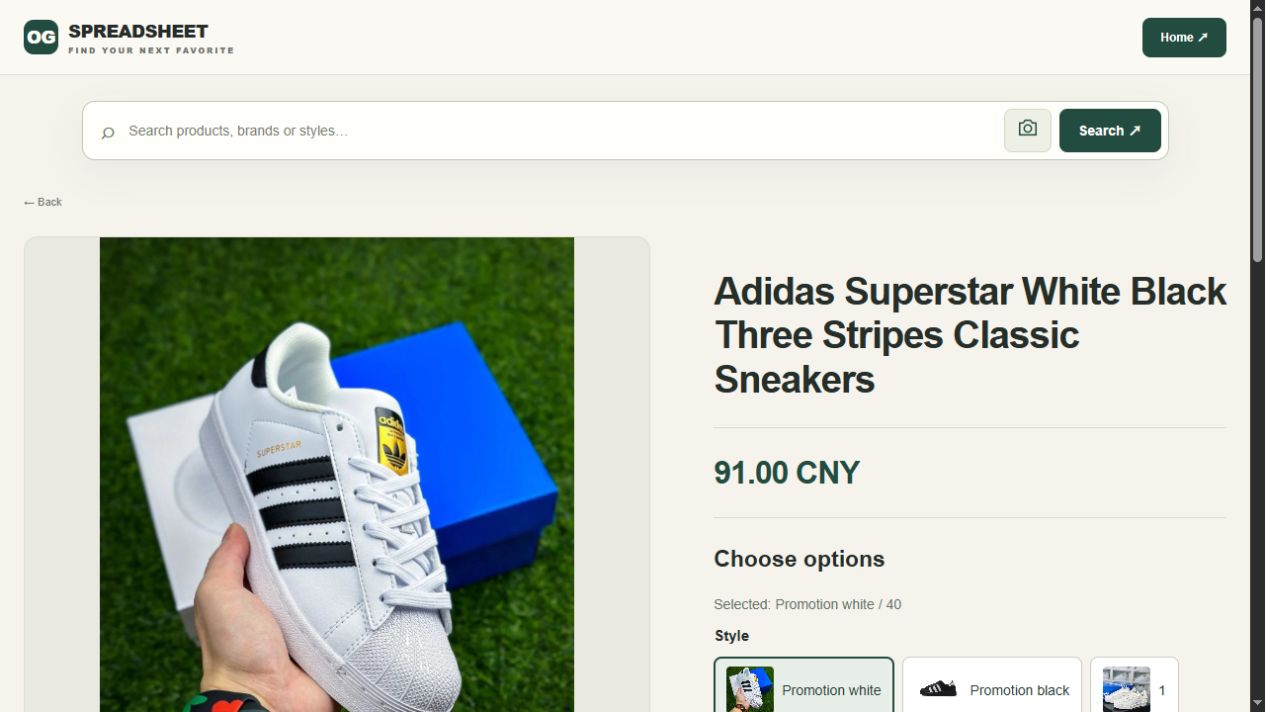
For a concrete candidate, consider a white-and-black low-top shoe:
Examine the white-and-black Superstar candidate on OG
Check the listing and the available option rather than relying on the name alone. Its visible branding does not independently establish authenticity. If your requirement is a particular fit or use, compare sizing or specifications that address it before retaining the pair on your shortlist.
Build a shortlist around one unanswered question
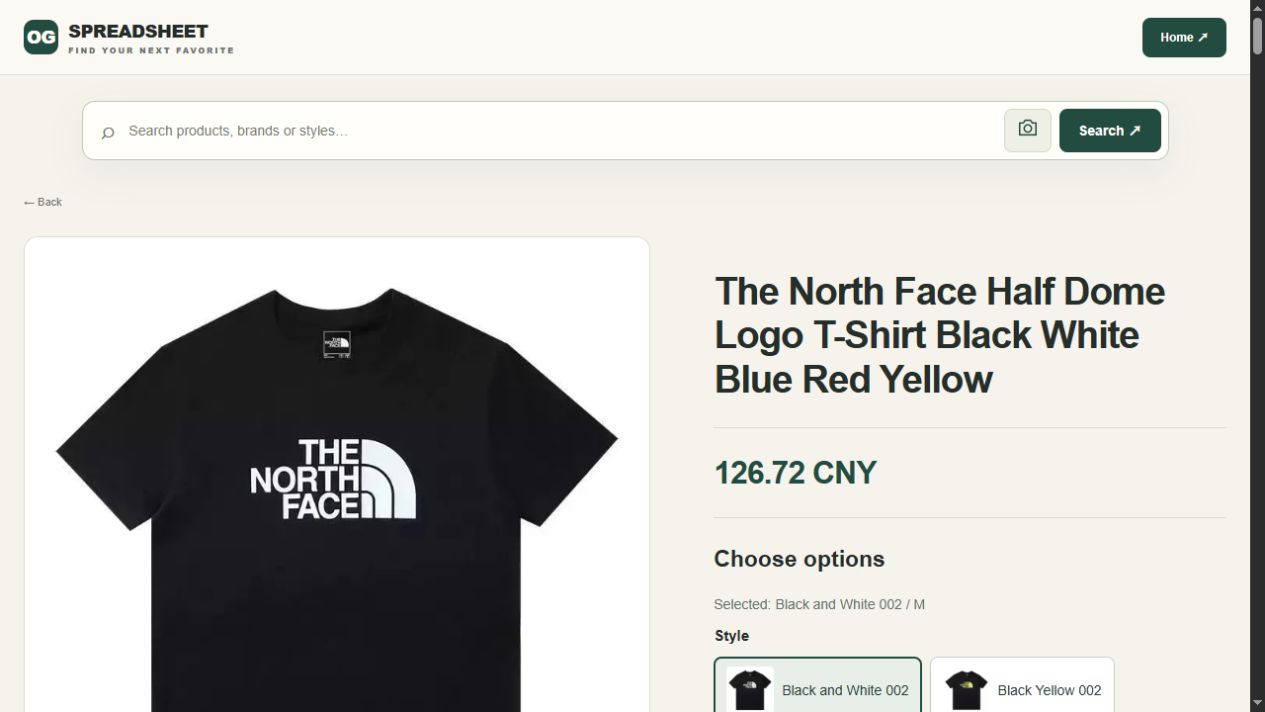
Suppose you need a T-shirt to wear under a jacket. You might begin with the T-shirt reference on OG. Before adding several similar-looking references, decide what you still need to know: body length, chest width or the placement of a visible feature.
Use one row for one intended option
Record the option you are considering, not every variation visible in the gallery. If you are genuinely comparing two sizes, keep them distinguishable. Otherwise a later note such as “length confirmed” may become attached to the wrong selection.
You can copy this field structure into your own notes:
Swipe sideways to see all columns
| Field | What to put there | What to avoid |
|---|---|---|
| Item reference | A recognisable name and its destination | A thumbnail with no recoverable link |
| Intended option | The colour, size, version or quantity you mean | Assuming the page's default is your choice |
| Purpose | The wardrobe gap or use this item serves | Keeping it only because the list is long |
| Open question | One detail needed before a decision | A vague score with no explanation |
| Last check | The date and what you actually checked | Dating every field from one page visit |
| Next action | Compare, ask, retain or remove | Calling an item ordered before a purchase |
This is a manual planning structure. It is not a stock feed, a price guarantee or a substitute for records inside your shopping account.
Work through a candidate without inventing details
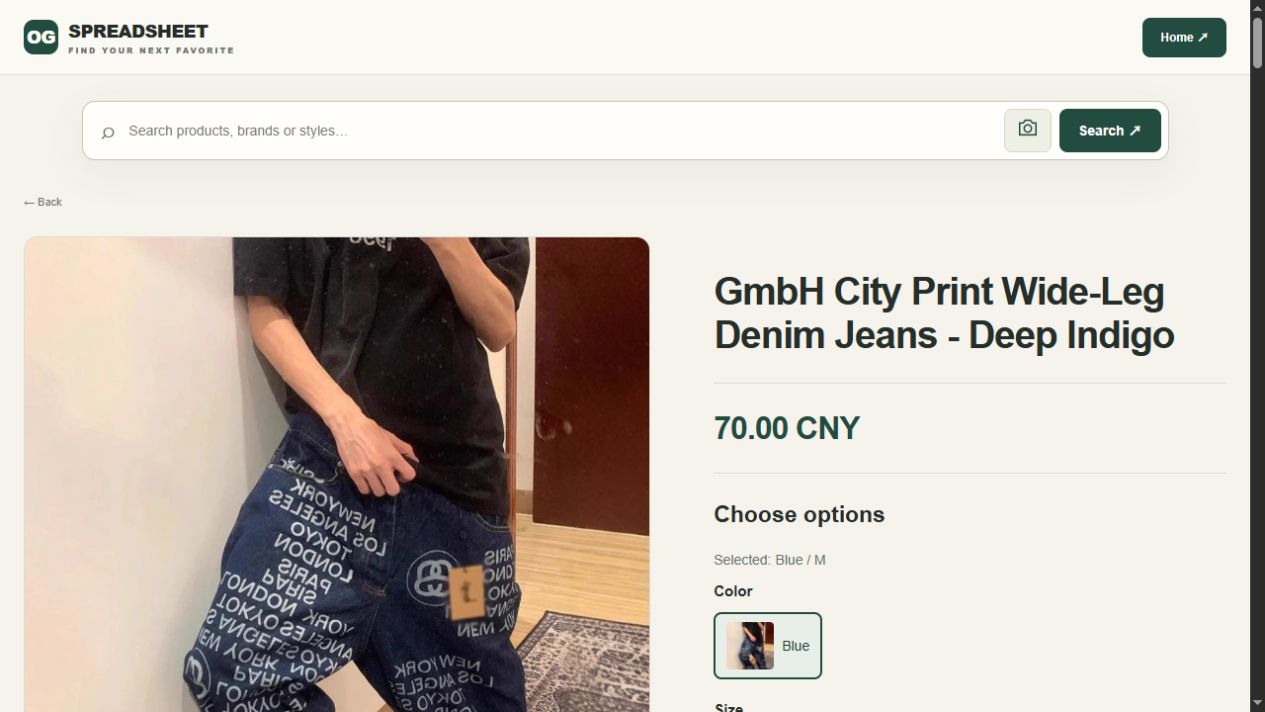
Suppose you are considering the GmbH city-print jeans on OG. The item reference can identify that page. Your intended size should come from your actual selection, not from an assumption in this guide.
A concrete row still needs an unanswered-question field
One dated row could record the actual 1 October 2026 selection Blue / M, the displayed 70.00 CNY and this jeans address. Keep the measurement question separate: the on-body picture does not state the model's size or a garment length. This makes the row useful without turning a complete-looking collection of cells into an unsupported fit claim.
For the open question, you might write “compare the selected option's inseam with my usual trousers”. Until you obtain that measurement, do not copy a number from a different pair because the silhouette looks similar. Once answered, note which option the measurement describes and how it was taken.
If the item no longer suits your purpose, move it out of the active shortlist without converting it into a negative product review. “Not needed for this purchase” and “poor quality” are different conclusions.
A first candidate, not a pre-filled basket
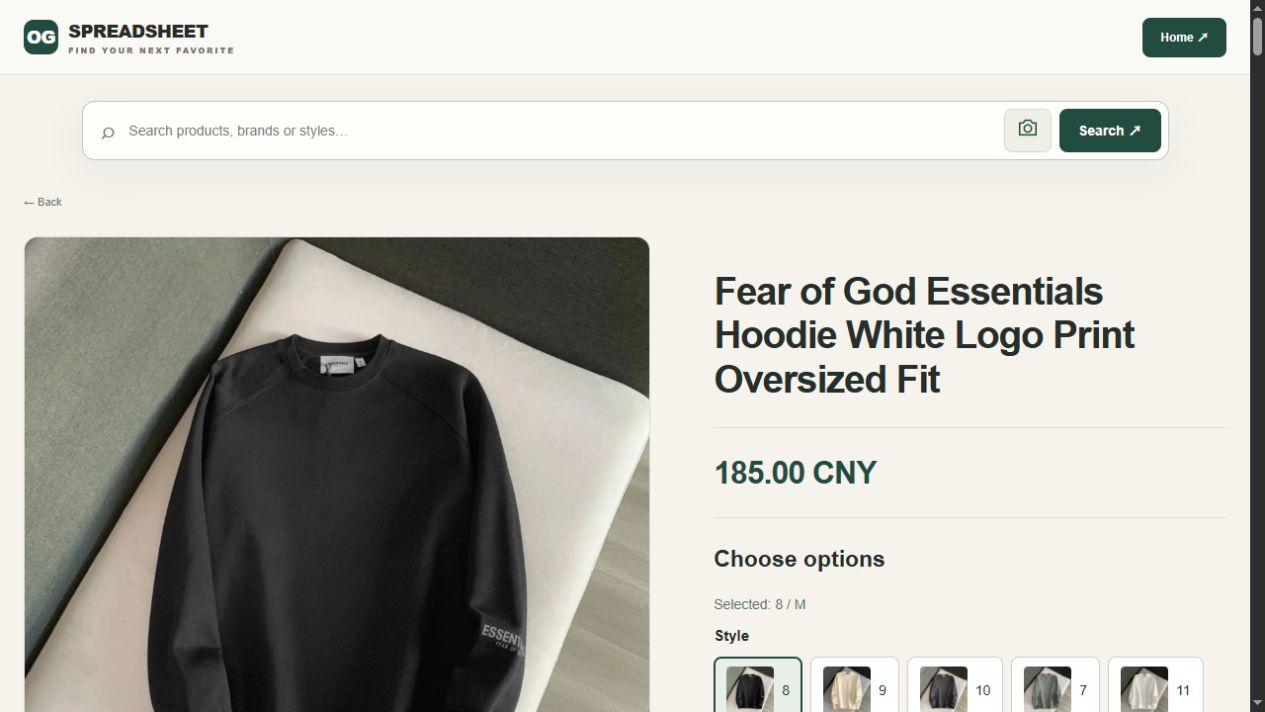
For an upper-layer starting point, view the garment options on OG. Read the currently selected option and compare the relevant dimensions with a garment you already use. Do not infer fabric composition, warmth or fit from the photograph alone.
Refresh the selected design as well as the amount
On 1 October 2026, Style 8 / M at this address showed a black crewneck and 185.00 CNY under a heading that still said hoodie. A meaningful refresh records that mismatch and the selected style. Do not mark the row ready for a hooded-layer requirement solely because the old or current heading uses the word hoodie.
Keep the candidate only if it answers your original need. If you wanted a layer under a close-fitting jacket, an appealing standalone photograph is not enough: the measurements, room for the hood and layering combination still need to work. This is why a shorter, deliberate shortlist can be more useful than dozens of unrelated saved links.
Use photographs to answer a defined question
Different images have different purposes. A listing image shows how a product is presented; an arrival photograph may show the particular item received at a warehouse. Neither automatically demonstrates every property you care about.
Choose a question before deciding that you need more images. A readable label might answer which size is attached. It does not by itself establish a garment's measured length or how it feels to wear. An extra wide-angle photo may add little if the important detail is a small fastening.
The QC photos guide helps separate visible details from conclusions that need other evidence. When reading a recommendation, ask whether its photographs belong to the same option and whether the author actually describes receiving or using the product.
Keep parcel planning separate from product discovery
A promising product price is not a complete budget. Before committing, establish the costs relevant to your own order and the later shipment you intend to arrange. Do not use somebody else's parcel total as though it were a quote for yours.
The shipping calculator guide explains which inputs need attention. The shipping guide covers the service decision, and delivery time distinguishes the periods people can mean when describing an order as fast or slow.
From your shortlist to an international parcel
USFans' first-time shopping instructions checked on 30 September 2026 separate two payment stages: goods plus domestic shipping in China first, then international parcel submission and payment after warehousing. Estimate the later freight before buying so that the first payment does not use up the whole budget. The amount for your parcel still depends on its contents and service.
- Confirm the source listing, selected option and quantity in the buying guide.
- Match warehouse information to that selection with the QC guide; resolve a mismatch through the returns guide before onward shipment.
- Review the actual parcel and destination in the shipping guide. Keep the item’s applicable storage deadline in view while waiting for other purchases.
Make a clean version before sharing
Share only the information needed for the question. A friend comparing a cut does not need your home address, private order references, account balance or login details. Keep personal purchase records apart from the version used for general discussion.
If somebody supplies a photograph, ask before reusing it elsewhere. A useful note can describe what the image helped you understand without presenting that person's purchase as your own.
Read in your preferred language
Use the Polish introduction, Spanish introduction or Latvian introduction for the corresponding guides. A translated description is not a country-specific shipping quote; use the destination and conditions relevant to your actual parcel when comparing costs or timing.
Common questions
Is the biggest USFans spreadsheet the best?
Not necessarily. Repeated products, unclear options and stale destinations can make a large collection harder to use. Assess whether it helps you make a better comparison, not simply how many rows it contains.
Does a product link guarantee availability?
No. Recheck the actual destination and selected option before acting. A saved entry describes a candidate; it does not reserve stock or freeze its price.
Can I rely on a recommendation without checking the option?
A recommendation can show you what to investigate. It does not establish that your chosen size, version or colour matches the one discussed. Keep that distinction intact even when the title looks identical.
What should I do when the missing detail could change my choice?
Resolve that detail before proceeding. Asking one precise question is more useful than collecting more general praise that does not address it.